Skip to content Go to the menu
University of Montpellier

Main Menu

  • University
  • Training
  • Research
  • Innovation
  • Campus
  • International
  • French

Quick access

Quick access

  • ENT
  • Websites
  • Colleges, schools, and institutes
  • Research organizations
  • Libraries
  • Emergencies
Research

Search results

Key International Water Initiative

Content type: Page
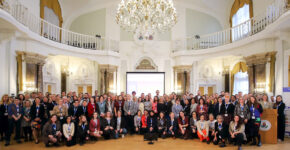
L’initiative clé internationale Water (INITIATE - InternatioNal InTercultural Interdisciplinary wATer nEtwork) est développée à l’Université dans le cadre du projet UM2030, lauréat de l’Appel à Projets « Intégration et Développement des IdEx et des ISITE » (IDéES). L’initiative est le résultat d’une collaboration multilatérale entre l’Université de Montpellier (UM) et ses partenaires stratégiques à travers le monde, dont trois Centres internationaux UNESCO (situés à Montpellier, Delft et Dundee). INITIATE représente une plateforme collaborative de formation doctorale et constitue une infrastructure mondiale virtuelle pour la coopération internationale sur les sciences de l’eau. https://www.youtube.com/watch?v=L-HQFeuB3BQ Présentation Les acteurs L’initiative INITIATE a été construite entre l’UM et ses partenaires dès 2022. Côté UM, l’initiative est portée scientifiquement par Olivier Barreteau, chercheur INRAE et directeur adjoint du Centre International UNESCO ICIREWARD (ICIREWARD) à Montpellier ainsi que par les chargés de projets Sandie Mennechet et Beatriz Gasparini Reis au sein d’ICIREWARD. L’initiative prend la forme d’une plateforme collaborative mondiale de formation doctorale réunissant des doctorants des partenaires stratégiques de cette institution. La Plateforme est gérée à l’UM par Nathalie Modjeska et Emilie Morin, au sein du Service d’appui à l’international et à l’attractivité des programmes structurants de la Direction des Programmes Structurants. Gouvernance La Plateforme est dirigée par un Comité de Pilotage International (CPI), qui comprend un haut représentant de chacune des institutions membres fondatrices de la Plateforme (UM et ses partenaires). Université de Montpellier, FR: Olivier Barreteau Australian National University, AU: Joseph Guillaume Dublin City University, IE: Fiona Regan IHE Delft Institute for Water Education, NL: Margreet Zwarteveen Rhodes University, ZA: Nelson Odume Université de Sherbrooke, CA: Marie-Amélie Boucher Université Laval, CA: François Anctil University Cheikh Anta Diop Of Dakar, SN: Awa Fall University Felix Houphouet Boigny, CI: Dimitri Soro University Mohamed 6 Polytechnique, MA: Abdelghani Chehbouni University of Barcelona, ES: Joaquim Farguell Pérez University of Dundee, GB: John Rowan Le CPI décide et supervise la mise en œuvre des orientations stratégiques et des activités globales de la Plateforme. Il se réunit virtuellement au moins une fois tous les deux mois virtuellement et en personne au moins une fois par an. 12 Partenaires Europe University of Montpellier (UM),FR University of Dundee, GB IHE Delft, NL Dublin City University (DCU), IE University of Barcelona, ES Amérique du Nord Université Laval, CA Université de Sherbrooke, CA Afrique Rhodes University, ZA University Cheikh Anta Diop of Dakar, SN University Felix Houphouet Boigny, CI University Mohamed VI Polytechnique (UM6P), MA Océanie Australian National University (ANU), AU Objectifs La plateforme vise à : Construire une communauté mondiale de futurs leaders des sciences de l'eau grâce à l'internationalisation de la formation doctorale et au développement de réseaux d'expertise et d'influence tout au long de la vie. Accroître l'impact des sciences de l'eau par la promotion et le soutien, au niveau doctoral, d'approches de recherche inter et transdisciplinaires et le développement d'expertises à l'interface science-politique-société dans le domaine de l'eau. Faciliter les opportunités de recherche à plus long terme ainsi que les perspectives de développement de carrière pour les scientifiques en début de carrière dans le domaine du développement durable. Faire progresser les pratiques de science ouverte et d'éducation ouverte grâce au développement de nouveaux partenariats mondiaux équitables. Programme La Plateforme doctorale INITIATE ambitionne de réunir une fois par an la cohorte de doctorants pour des écoles de terrain et/ou des formations sur des thématiques de sciences de l'eau. Chaque cohorte est constituée jusqu'à 2 doctorants par institution partenaire pour une durée de deux ans. Ces jeunes chercheurs, issus de domaines de recherche sur l’eau variés, sont conviés à participer à des activités en ligne et en présentiel pendant cette période et après, ils rejoindront un réseau d'Alumni avec d'autres anciens boursiers INITIATE. INITIATE vise à favoriser l’interdisciplinarité et l’interculturalité à travers la diversité des doctorants qu’elle réunit. Les doctorants travaillent en groupe et échangent afin de renforcer leurs liens et de former un réseau international de futurs leaders des sciences de l'eau. La Plateforme offre : Des opportunités de publication de documents, création de supports de communication par les doctorants Une infrastructure virtuelle mondiale pour faciliter la discussion et le partage de documents Une visibilité de la thématique de recherche à l’international La possibilité de participer à des événements internationaux Une opportunité de réseautage pour les jeunes chercheurs La première cohorte, promotion 2024, comprend 19 étudiants de 11 nationalités. Ces doctorants seront réunis au Maroc du 25 au 29 novembre 2024 pour la première école d’automne et devraient être accueillis à Montpellier en octobre 2025 pour la deuxième école d'automne.

Ratings, labels, scales… the challenge of labeling to promote sustainable eating

Content type: The Conversation

Published on: September 16 , 2024

...among citizens. This is indeed an urgent issue: in France, according to the Agency for…

“The PUI… an invisible force that supports all projects”

Content type: Article

Published on: September 13 , 2024

Vice President of the University of Montpellier in charge of partnerships and…

Film Screening and Discussion on the Médiator Case, featuring Irène Frachon

Content type: Calendar
Date: 07 Oct 2024
Location: School of Pharmacy - Lecture Hall A

Call for Expressions of Interest: ExposUM “Science-Society Interactions”

Content type: Call for proposals

Published on: September 10 , 2024

...a broad audience, including students. Eligibility for…

Brutal transparency and gentle confinement: how collaborative platforms control you

Content type: The Conversation

Published on: September 8 , 2024

...90% positive reviews and more than one year of service…

A Tribute to Pierre Bertholon (1741–1800), Scientist and Electrical Engineer of the Enlightenment

Content type: Calendar
Date: 04 Oct 2024
Location: Institute of Botany – Charles Flahault Amphitheater – 163 Rue Auguste Broussonnet, 34000 Montpellier

Para-athletes: "Inspirational porn" and stereotypes, the struggle to secure sponsors

Content type: The Conversation

Published on: August 25 , 2024

...In elite para-sports, a tendency to dwell on one's misfortunes can be found, for example, in the…

Shanghai, Leiden, Reuters:UM international rankings

Content type: Article

Published on: August 15 , 2024

...2030). Shanghai Ranking: UM in the Top 200 The 2025 Shanghai Global Ranking…

Chlorothalonil contamination: a challenge for drinking water treatment

Content type: The Conversation

Published on: August 13 , 2024

...R417888, as “relevant.” Result: the alert threshold…

Journey into Geosciences: From Habitable Planets to Critical Mineral Resources

Content type: Calendar
Date: 12 Nov 2024
Location: La Panacée - 14 rue de l’École de Pharmacie, Montpellier, and online

Innovation is also part of Lumlu!

Content type: LUM Magazine , Podcast

Published on: July 18 , 2024

...brain activity—that’s the promise of the startup Semaxone. A…

Innovation After-Work Event: “An industry with a bright future—and the future of all industries”

Content type: Article

Published on: July 17 , 2024

...a school in Montpellier that was one of the five pilot schools in the…

Research Ethics Committee (CER) of the University of Montpellier

Content type: Page
The University of Montpellier’s Research Ethics Committee was officially established on February 8, 2022. Its objective is to strengthen the mechanisms put in place by the University of Montpellier to promote awareness and the application of ethical and professional principles in response to the questions raised by scientific progress and its contemporary societal implications, regardless of the field of research. The Research Ethics Committee of the University of Montpellier is authorized to provide advisory ethical opinions on research projects and protocols across all scientific fields, particularly those involving human subjects, privacy issues, and data relating to human subjects. However, projects falling under Law No. 2012-300 of March 5, 2012, on research involving human subjects (known as the “Jardé Law”) and its implementing decree No. 2016-1537 of November 16, 2016, and falling under Articles R.1121-1-1 and R.1121-1-2 of the Public Health Code defining research involving human subjects, are, for their part, subject to the jurisdiction of the Committees for the Protection of Persons (CPP). Scope of Application and Operating RulesDownload GDPRDownload Calendar of Research Ethics CommitteesDownload Procedures for Submitting Cases to theUM Research Ethics Committee UM . Who can submit a case toUM  Research Ethics CommitteeUM  Research project leaders who are employees of the University of Montpellier and the École Nationale Supérieure de Chimie, as well as any employee assigned to a research unit under the primary supervision of the University of Montpellier or the École Nationale Supérieure de Chimie. For users of the University of Montpellier and the École Nationale Supérieure de Chimie, it is the scientific supervisor (internship advisor, thesis advisor, HDR scientific advisor, etc.) who may submit a request toUM. 2. When should a request be submitted toUM Research Ethics CommitteeUM Requests to theUM Research Ethics CommitteeUM submitted prior to the start of a project. The request must be submitted approximately three to four weeks before the meeting is held. 3. How to submit a requestUM  CERUM  The completed submission form must be sent by email. Would you like to learn more about submitting a request to the CER? There are important points to consider when completing the form: Data use: Data storage (retention period, practical safeguards, identity of the person responsible) Data archiving procedures Clarification of the procedure for disseminating data to the public Data confidentiality: Process/method for anonymizing data Data confidentiality management Application(s) used for data collection Details about the project/study: Study start date Duration of the experiment Details on the study’s conduct Order of magnitude of potential earnings Protocol based on study participants Interview guide / Questionnaire Explanation of acronyms Consent: More explicit consent Written consent from legal guardians for minors under 15 years of age Provide the informed consent form Information sheet: Details of information provided to participants Adaptation of information sheets for different audiences Indication of potential risks of the study in the information sheet 4. What is theUM  REC’s response timeUM  Advisory ethical opinions are sent to project sponsors within three weeks of the meeting. Would you like to learn more about the responses provided by theUM  RECUM  The REC may issue several types of opinions: Favorable opinion Favorable opinion subject to requested modifications* Unfavorable opinion Declaration of lack of jurisdiction *The opinion will specify the modifications, clarifications, or documents required for your research protocol. To submit your amended application: You must highlight your responses to theUM REC’s requests in the submission formUM Check the “amendment” box; Send it via email. Depending on the CER’s wording: “Approval by the file rapporteurs and the Chair of the Research Ethics Committee”: the file will be approved by the committee after receiving positive responses from the relevant parties. “Must be resubmitted to the Research Ethics Committee”: the application will be subject to a new review by the Research Ethics Committee.

Digital Master Plan: The University of Montpellier Charting Its Digital Course

Content type: Article

Published on: July 10 , 2024

...as well as the recommendations of HCERES and the Court of Auditors…

Montpellier-Sherbrooke: A Long-Term Partnership

Content type: Article

Published on: July 5 , 2024

...numerous scientific collaborations have taken place in a wide variety of…

Page navigation

Previous Page1 … Page12 Page13 Page14 Page15 Page16 … Page51 Next

FollowUM "
" news

Subscribe to the newsletter
University
  • Organization, Governance, and Governing Bodies
  • Colleges, schools, and institutes
  • Research organizations
  • Flagship Projects
  • Heritage
  • Environmental Issues and Social Responsibility
  • Working at the University
Training
  • Admissions & Registration
  • Career Guidance, Internships, and Jobs
  • Succeeding in School
  • Enhance your education
  • Graduate school
  • Educational Innovation
Research
  • Research Centers
  • Doctoral and HDR Training
  • Science and Society
  • Scientific appeal
  • Major Programs
Innovation
  • University Innovation Hub (PUI)
  • University-Industry Partnerships
  • Valuation
  • Entrepreneurship
Campus
  • Art & Culture
  • Student Life
  • Health, Social Services & Disabilities
  • Sports
  • Community Life
International
  • International Partnerships
  • Mobility
  • Erasmus+ Training Projects
  • Classes in English
  • CHARM-EU European University
  • Scientific appeal


UNIVERSITYOF MONTPELLIER
163 Auguste Broussonnet Street
34090 Montpellier

04.67.41.74.00

  • News
  • Calendar
  • Press Room
  • Facebook
  • Twitter
  • Pinterest
  • Instagram
  • YouTube
  • LinkedIn
  • Legal Notice
  • Accessibility: partially compliant
  • Privacy Policy
  • Site Map
  • Public Procurement